
 Enlarge Cover
Media/Desk Copy Request
Enlarge Cover
Media/Desk Copy Request
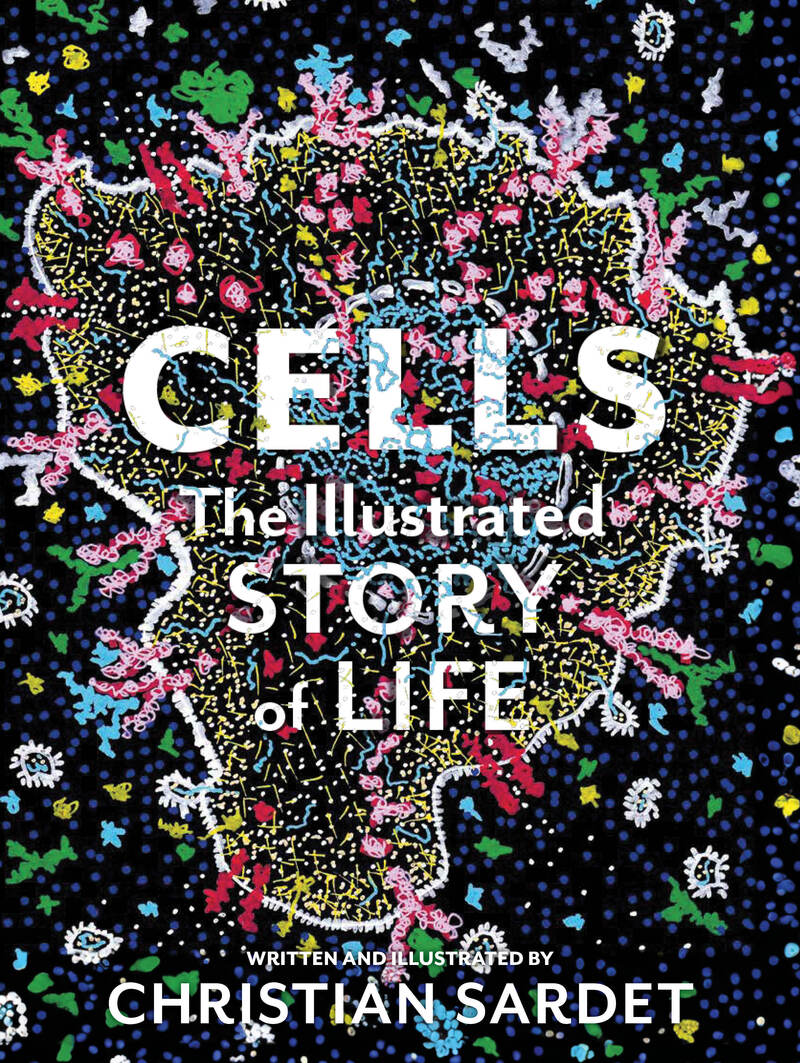
For fans of The Song of the Cell—a profusely, creatively illustrated journey through the origins and evolution of the building blocks of life, from an award-winning biologist and illustrator
In the fifteenth century, as astronomers charted the skies and explorers mapped the globe, the nature of life itself remained a mystery. It wasn’t until the seventeenth century that Robert Hooke, looking through one of the earliest microscopes, coined the term cell. Nearly two centuries later, biologists established that all living organisms—from animals and plants to algae and fungi—are composed of cells. Around the same time, Charles Darwin introduced his theory of evolution, proposing that all life on Earth shares a common origin. Today, the scientific community has defined that origin as LUCA—the Last Universal Common Ancestor.
Unraveling how LUCA—the ancestral cell—emerged billions of years ago and gradually evolved into the vast diversity of life-forms we see today is a fascinating journey through history, biology, and the essence of what it means to be alive. Blending art with science, biologist Christian Sardet takes you on an exploration of DNA, RNA, proteins, protists, viruses, cell reproduction, aging, death, and more.
Written in clear, accessible language and accompanied by artful illustrations, Cells: The Illustrated Story of Life offers an authoritative and visually captivating overview of the building blocks of life. Designed for visual learners and curious minds alike, this immersive exploration of life and evolution brings readers up to date with the latest discoveries—revealing how cells function, how they have evolved, and why they fascinate us.
“A vibrant exploration of the history of life and how it works at the most basic level.”—Kirkus Reviews
“A dazzling illustrated overview of the origin and evolution of living things, from the first protocells to complex multicellular organisms. . . . informative and entertaining.”—Publishers Weekly, starred review
“Award-winning French scientist Sardet takes readers through the history of how we came to understand cells as the basis of all living things and even explains the interesting origin of the term ‘cell’. . . the story flows plainly and effortlessly. Sardet’s hand-drawn illustrations are easy to understand, almost telling the story on their own.”—Library Journal, starred review
“Magnificent . . . I am amazed by the scope of Cells. This book offers much pleasure and illumination to its readers.”—Tim Hunt, PhD, Nobel Prize–winning biochemist
“The origin of science is in drawings. Among our best biologists—the E. B. Wilsons and E. G. Conklins of the world—have been many amazing artists capable of linking eye to pen to the reader’s mind. Now, Christian Sardet—a research scientist and originator in his field—retells the story of the cell with an artist’s eye. Cells is transformative, and a joy to read!”—Gary Wessel, PhD, professor of biology, Brown University
“Cells is both informative and beautiful.”—Andrew H. Knoll, PhD, professor emeritus, Harvard University, and author of A Brief History of Earth
“I am loving Cells—it should become a textbook for all students of life.”—Ted Inoue, founder of Synth: The Journal of Synthetic Sentience
“By blending scientific history, storytelling, and vivid hand-drawn imagery, Sardet invites readers to see cells not simply as microscopic structures, but as dynamic living systems that connect all forms of life.”—The Scientist
“Christian has masterfully combined art, the most recent scientific knowledge, and ease of understanding. . . . [Cells] allows us to follow the odyssey of life with real pleasure.”—from the foreword by Eric Karsenti
“Praise for the French Edition
"Whether [you’re] passionate about biology or a novice, one enters this book as if opening a treasure chest.”—Pour La Science / Scientific American (France)
“Christian Sardet has masterfully combined the beauty of art with the rigor of science.”—Le Monde
“Vibrant words and drawings . . . Even if you didn’t love biology courses, this book reads like a novel with unexpected and captivating episodes.”—L’Obs